Electric Vehicle Transmission Market Insights
Electric Vehicle Transmission Market size is estimated to be USD 12.5 Billion in 2024 and is expected to reach USD 30.8 Billion by 2033 at a CAGR of 10.5% from 2026 to 2033.
The Electric Vehicle Transmission Market is a dynamic segment of the automotive industry focused on the systems that transfer power from electric motors to the wheels of electric vehicles (EVs). This market is expected to witness significant growth due to the increasing adoption of electric vehicles, driven by govement policies aimed at reducing carbon emissions and promoting sustainability. According to the U.S. Department of Energy, the sale of electric vehicles is projected to reach 18 million units by 2030, indicating a compound annual growth rate (CAGR) of approximately 20% from 2022 levels. This shift not only showcases the growing consumer demand for greener transportation options but also emphasizes the need for efficient and reliable transmission systems that cater to this new paradigm.
The market landscape is evolving rapidly, influenced by advancements in technology and shifting consumer preferences. Innovations such as multi-speed transmissions and the integration of smart technologies are redefining how power is managed in EVs. A notable aspect of this market is the emphasis on lightweight and compact designs, which enhance vehicle performance and energy efficiency. Recent reports indicate that the global electric vehicle transmission market size was valued at approximately $10 billion in 2022 and is expected to exceed $30 billion by 2030, with substantial investment pouring into research and development efforts.
Key components of the electric vehicle transmission include gearboxes, electric motors, and control systems. The need for high-efficiency gearboxes is particularly pronounced, as these systems are integral in optimizing the vehicle's performance and energy consumption. Gearboxes designed for electric vehicles differ significantly from those in traditional vehicles, as they must handle higher torque at lower speeds. The importance of these components can be further explored through the Electric Vehicle Transmission Market analysis provided by Verified Market Reports, which highlights trends and forecasts that are essential for understanding the future trajectory of this market.
Electric Vehicle Transmission Market Key Takeaways
- Regional Contribution to Market Revenue in 2023: - North America: 25%, Asia Pacific: 40%, Europe: 20%, Latin America: 5%, Middle East & Africa: 10%. - Asia Pacific remains the largest contributor, with a significant share of 40% of the total market revenue.
- Fastest Growing Region: - Asia Pacific is the fastest-growing region, driven by increasing EV adoption, supportive govement policies, and strong automotive manufacturing in China and Japan.
- Market Performance by Type: - Single-Gear Transmission: 60%, Multi-Gear Transmission: 40%. - Single-Gear Transmission holds the majority share due to its simplicity and cost-effectiveness for electric vehicles.
- Fastest Growing Sub-segment by Type: - Multi-Gear Transmission is projected to grow at the fastest rate, driven by the demand for improved power efficiency and performance in high-end electric vehicles.
- Key Applications: - Household Vehicles: 70%, Commercial Vehicles: 30%. - Household vehicles account for the largest market share due to widespread EV adoption for personal use.
- Fastest Growing Sub-segment by Application: - Commercial Vehicles are expected to grow at the fastest rate during the forecast period, supported by the global push for electrifying logistics and public transportation fleets.
Electric Vehicle Transmission Market Dynamics
The electric vehicle (EV) transmission market is experiencing transformative dynamics driven by technological advancements, shifting consumer preferences, and stringent government regulations aimed at reducing carbon emissions. As the world leans toward sustainable transportation, the demand for electric vehicles is surging. According to the U.S. Department of Energy, the market for electric vehicles has seen a growth rate exceeding 50% annually in the past few years, which indicates a paradigm shift in the automotive industry. The integration of advanced transmission systems in electric vehicles is pivotal, as these systems enhance efficiency, performance, and overall driving experience.
Market Drivers
Several factors are propelling the electric vehicle transmission market. Firstly, the increasing adoption of electric vehicles, fueled by consumer awareness regarding environmental issues and rising fuel prices, has created a robust demand for efficient transmission systems. The global electric vehicle market was valued at approximately $163.01 billion in 2020 and is projected to reach $800 billion by 2027, according to the International Energy Agency. Furthermore, government incentives, such as tax rebates and subsidies for electric vehicle purchases, are significantly driving market growth. These incentives not only lower the overall cost for consumers but also encourage manufacturers to invest in innovative transmission technologies.
Another crucial factor influencing the electric vehicle transmission market is the continuous improvement in battery technology, which is intricately linked to transmission systems. Enhanced battery performance allows for better energy management and higher power output, leading to an improved driving range. The evolution of these systems, especially concerning [electric vehicle gearboxes]( is vital for the seamless operation of electric vehicles. As more manufacturers develop advanced gearbox technologies, the overall efficiency of electric vehicles continues to improve, further enticing consumers.
Market Restraints
Despite the promising growth trajectory, the electric vehicle transmission market faces several challenges. High manufacturing costs associated with advanced transmission systems can hinder market expansion, particularly in developing regions where cost sensitivity is more pronounced. The intricate design and technology required for electric vehicle transmissions can lead to elevated production costs, which may not be sustainable for all manufacturers. Additionally, the relatively slow pace of infrastructure development, such as charging stations, poses a restraint on the widespread adoption of electric vehicles, impacting the overall demand for electric vehicle transmission systems.
Market Opportunities
The electric vehicle transmission market presents significant opportunities for growth and innovation. As the automotive industry shifts towards electrification, there is ample scope for manufacturers to invest in research and development of next-generation transmission systems. The rising trend of autonomous driving technology also opens avenues for advancements in transmission systems, as these vehicles require highly sophisticated mechanisms to operate efficiently. Moreover, partnerships and collaborations between automakers and technology firms can lead to breakthroughs in transmission technologies, enhancing overall vehicle performance and efficiency.
Market Challenges
While opportunities abound, the market is not without its challenges. The rapid evolution of technology necessitates continuous innovation, and companies may struggle to keep pace with the evolving landscape. Additionally, competition from traditional internal combustion engine vehicles, which have well-established supply chains and lower costs, poses a significant challenge. Consumer perception remains another hurdle; many potential buyers still have concerns regarding the range, performance, and reliability of electric vehicles compared to their gasoline counterparts. Addressing these perceptions through effective marketing and consumer education will be essential for the electric vehicle transmission market to thrive.
Electric Vehicle Transmission Market Segmentation
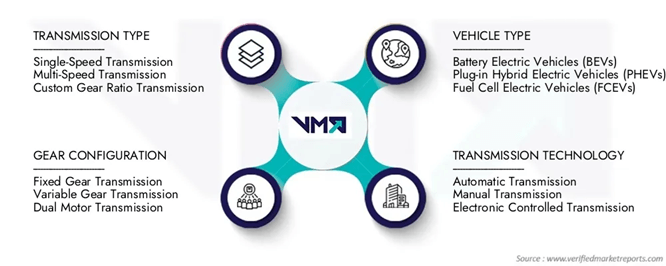
By Transmission Type
- Single-Speed Transmission
- Multi-Speed Transmission
- Custom Gear Ratio Transmission
By Vehicle Type
- Battery Electric Vehicles (BEVs)
- Plug-in Hybrid Electric Vehicles (PHEVs)
- Fuel Cell Electric Vehicles (FCEVs)
By Gear Configuration
- Fixed Gear Transmission
- Variable Gear Transmission
- Dual Motor Transmission
By Transmission Technology
- Automatic Transmission
- Manual Transmission
- Electronic Controlled Transmission
By Component Type
- Gear System
- Control System
- Cooling System
- Lubrication System
By Geography
- North America
- Europe
- Asia Pacific
- Middle East & Africa
- Latin America
Introduction of Electric Vehicle Transmission Market
Market Definition
Market Segmentation
Research Timelines
Assumptions
Limitations
Research Methodology
Data Mining
Secondary Research
Primary Research
Subject Matter Expert Advice
Quality Check
Final Review
Data Triangulation
Bottom-Up Approach
Top-Down Approach
Research Flow
Executive Summary
Market Overview
Ecology Mapping
Primary Research
Absolute Market Opportunity
Market Attractiveness
Electric Vehicle Transmission Market Geographical Analysis (CAGR %)
Electric Vehicle Transmission Market by Transmission Type USD Million
Electric Vehicle Transmission Market by Vehicle Type USD Million
Electric Vehicle Transmission Market by Gear Configuration USD Million
Electric Vehicle Transmission Market by Transmission Technology USD Million
Electric Vehicle Transmission Market by Component Type USD Million
Future Market Opportunities
Product Lifeline
Key Insights from Industry Experts
Data Sources
Electric Vehicle Transmission Market Outlook
Electric Vehicle Transmission Market Evolution
Market Drivers
Driver 1
Driver 2
Market Restraints
Restraint 1
Restraint 2
Market Opportunities
Opportunity 1
Opportunity 2
Market Trends
Trend 1
Trend 2
Porters Five Forces Analysis
Value Chain Analysis
Pricing Analysis
Macroeconomic Analysis
Regulatory Framework
by Transmission Type
Overview
Single-Speed Transmission
Multi-Speed Transmission
Custom Gear Ratio Transmission
by Vehicle Type
Overview
Battery Electric Vehicles (BEVs)
Plug-in Hybrid Electric Vehicles (PHEVs)
Fuel Cell Electric Vehicles (FCEVs)
by Gear Configuration
Overview
Fixed Gear Transmission
Variable Gear Transmission
Dual Motor Transmission
by Transmission Technology
Overview
Automatic Transmission
Manual Transmission
Electronic Controlled Transmission
by Component Type
Overview
Gear System
Control System
Cooling System
Lubrication System
Electric Vehicle Transmission Market by Geography
Overview
North America Market Estimates & Forecast 2022 - 2032 (USD Million)
U.S.
Canada
Mexico
Europe Market Estimates & Forecast 2022 - 2032 (USD Million)
Germany
United Kingdom
France
Italy
Spain
Rest of Europe
Asia Pacific Market Estimates & Forecast 2022 - 2032 (USD Million)
China
India
Japan
Rest of Asia Pacific
Latin America Market Estimates & Forecast 2022 - 2032 (USD Million)
Brazil
Argentina
Rest of Latin America
Middle East and Africa Market Estimates & Forecast 2022 - 2032 (USD Million)
Saudi Arabia
UAE
South Africa
Rest of MEA
Competitive Landscape
Overview
Company Market Ranking
Key Developments
Company Regional Footprint
Company Industry Footprint
ACE Matrix
Company Profiles
Introduction
GKN
Company Overview
Company Key Facts
Business Breakdown
Product Benchmarking
Key Development
Winning Imperatives*
Current Focus & Strategies*
Threat from Competitors*
SWOT Analysis
